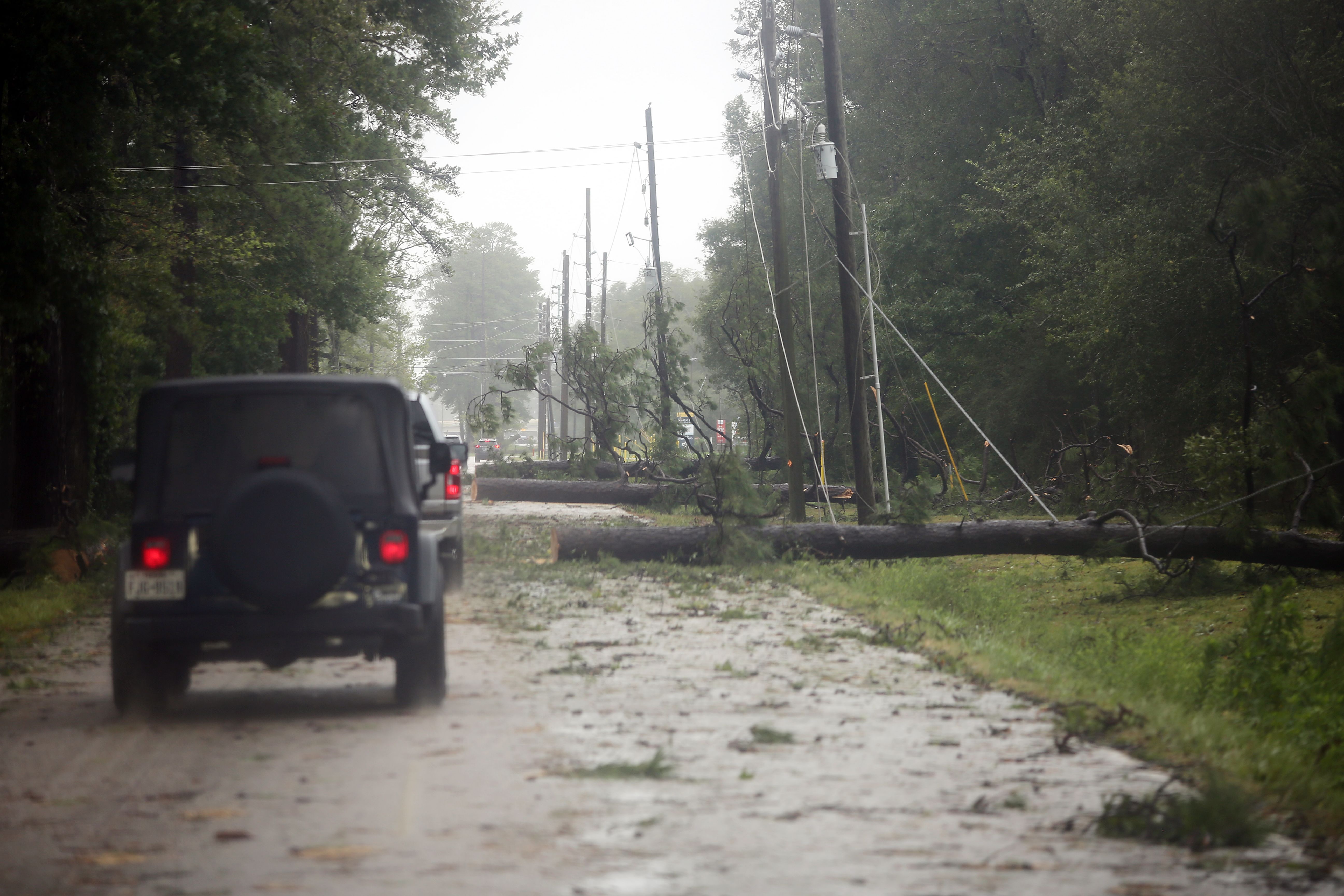
Missouri City and Stafford homeowners still living with Hurricane Beryl damage can now apply for state-funded repairs or reimbursement worth tens of thousands of dollars.
The Texas General Land Office (GLO) is accepting applications for two recovery programs covering 27 federally designated counties, including Fort Bend, KPRC 2 reported Thursday, Aug. 27. The agency allocated $244.1 million for home repairs and reconstruction and $43.1 million for reimbursements. Funding comes from a $555.7 million Community Development Block Grant Disaster Recovery award from the U.S. Department of Housing and Urban Development (HUD).
The money is first-come, first-served.
GLO Commissioner Dawn Buckingham urged homeowners not to wait. "There's nothing that helps you by waiting," she told KPRC 2. "It's always better to be first at the table, so come on and apply."
Pick one program
Eligible homeowners must choose one program. They cannot receive help through both. Both Missouri City and Stafford fall within Fort Bend County and are eligible.
Homeowner Assistance Program: The GLO will repair or reconstruct a damaged home. The cap is $90,000 for a nonhistoric home and $175,000 for a historic home. The property must have at least $8,000 in verified disaster damage. Approved applicants may also qualify for up to $7,000 in temporary relocation assistance during construction, hazard-mitigation work, disability accommodations and one year of homeowners or flood insurance.
Homeowner Reimbursement Program: Homeowners who already paid for repairs out of pocket can seek $3,000 to $75,000 back for a stick-built home, or $3,000 to $50,000 for a manufactured home. Repairs must have been completed before July 7, 2025. Applicants need receipts, paid invoices or other proof of payment.
A GLO inspector will visit the property under either program.
Who qualifies
Both programs are limited to a homeowner's primary residence. Rental properties, vacation homes and second homes do not qualify. Applicants must prove they owned and occupied the home when the 2024 disaster struck.
Household income cannot exceed 200% of the area median income, according to the GLO. The exact cap varies by county and household size. Homes in a federally designated floodway are not eligible, and homes in certain flood-risk zones may need elevation work.
The GLO will factor in any money a homeowner already received from the Federal Emergency Management Agency (FEMA), the U.S. Small Business Administration (SBA), the National Flood Insurance Program (NFIP), the Texas Windstorm Insurance Association (TWIA) or private insurers. Federal rules prohibit paying twice for the same repair, so prior aid may reduce the final amount.
How to apply
Applications are open now at recovery.texas.gov/apply. No in-person intake event has been scheduled for Fort Bend County. Homeowners do not need to wait for one.
Required documents include a valid photo ID for every adult in the household, proof of ownership, proof of identity and legal status, proof of primary residency, income records, property-tax records, mortgage information and photos or other evidence tying the damage to an eligible 2024 disaster. Reimbursement applicants must also provide receipts and proof of payment.
An application is not considered complete until all documents are submitted.
For help, residents can call the GLO recovery hotline at 1-844-893-8937, available 8 a.m. to 5 p.m. Monday through Friday, or email [email protected] with their full name, address and county.
Local context
Hurricane Beryl made landfall as a Category 1 storm on July 8, 2024, causing an estimated $2.5 billion to $4.5 billion in wind damage across the region. A Rice University Kinder Institute survey published in October 2025 found about 1 in 8 residents across Fort Bend, Harris and Montgomery counties still reported their lives were disrupted by the storm a year later. Recovery was slowest for households earning less than $25,000 annually.
Residents of the city of Houston and Harris County are not eligible for these GLO programs. HUD awarded those jurisdictions separate disaster recovery funds.